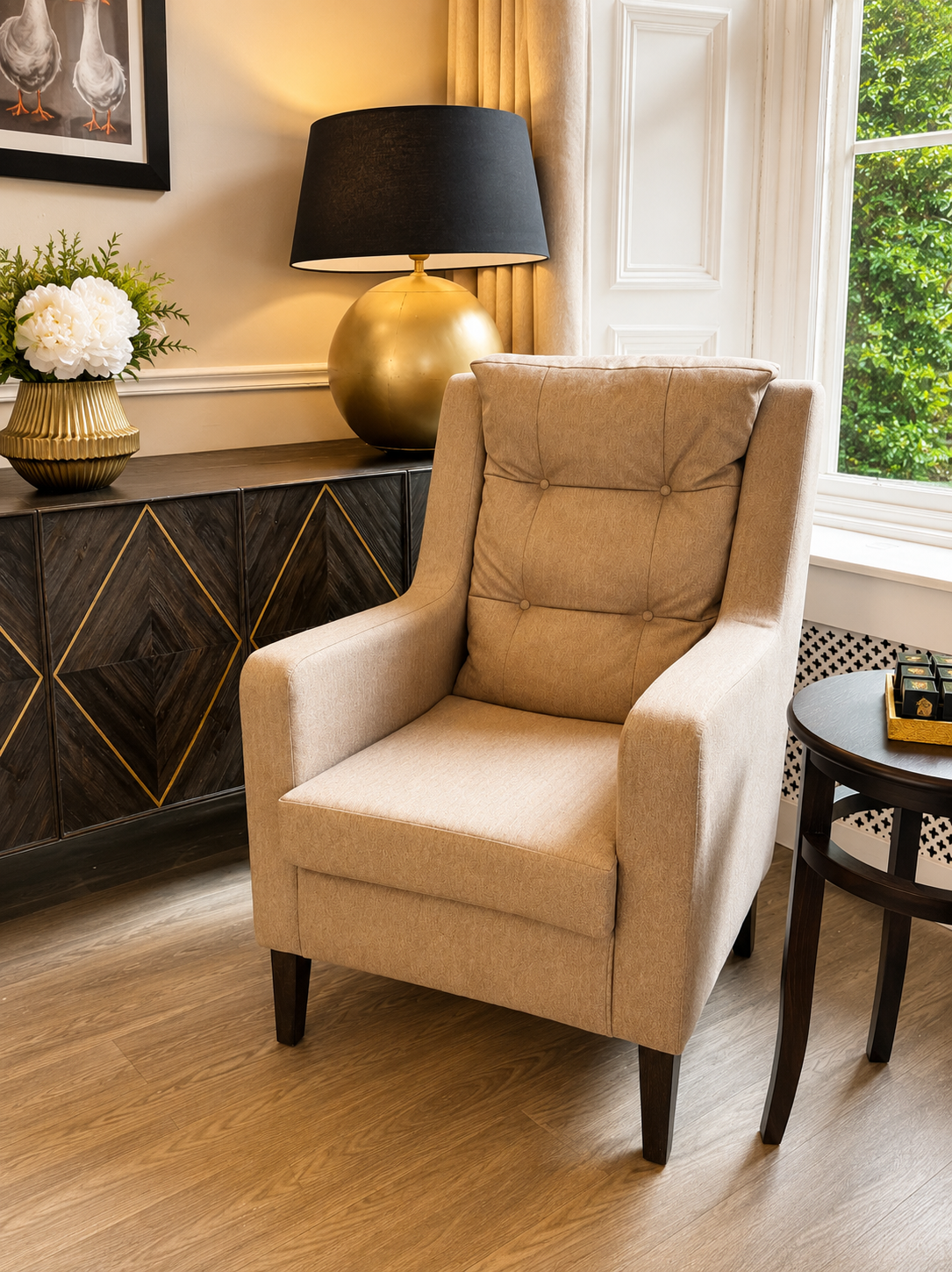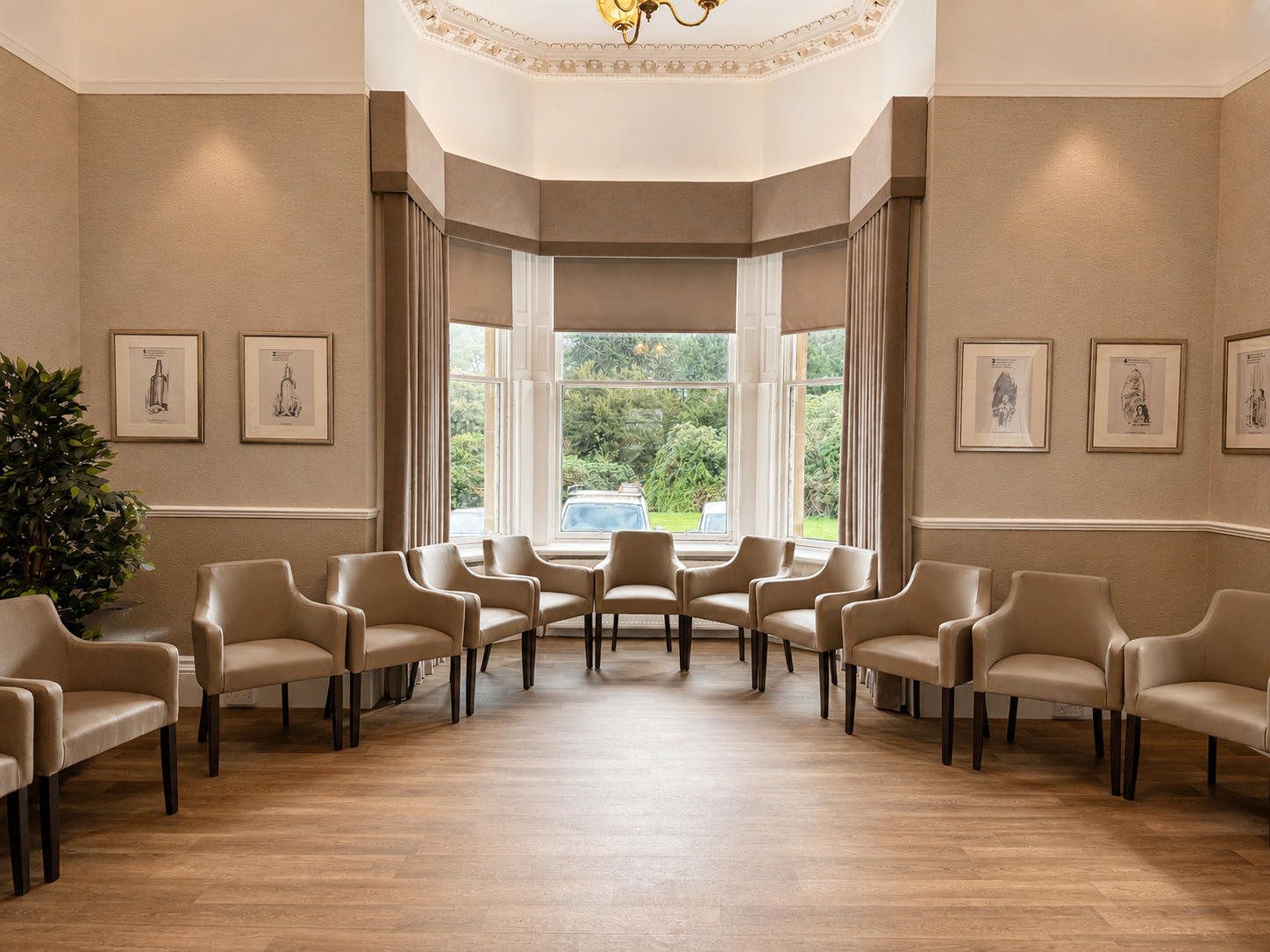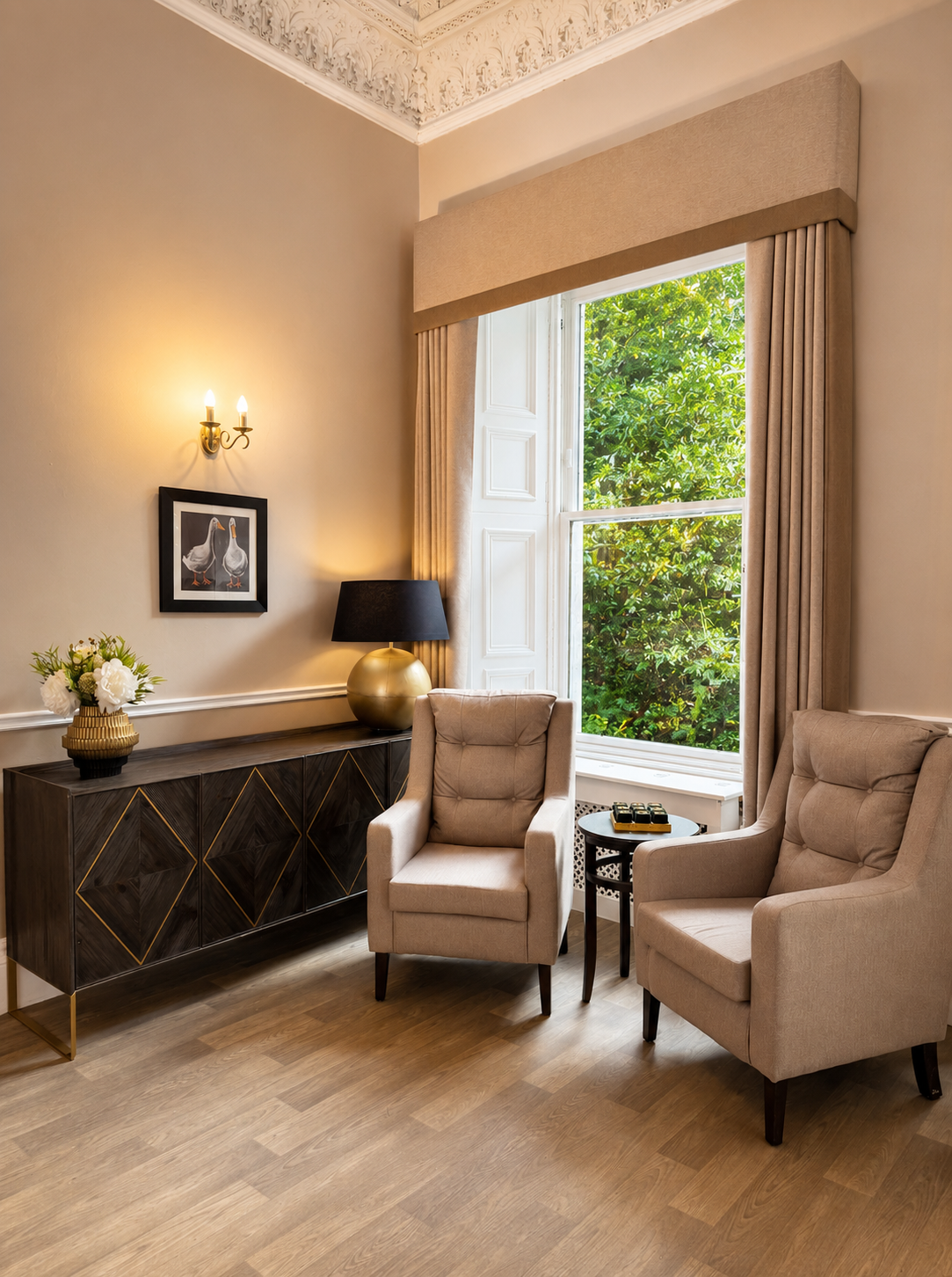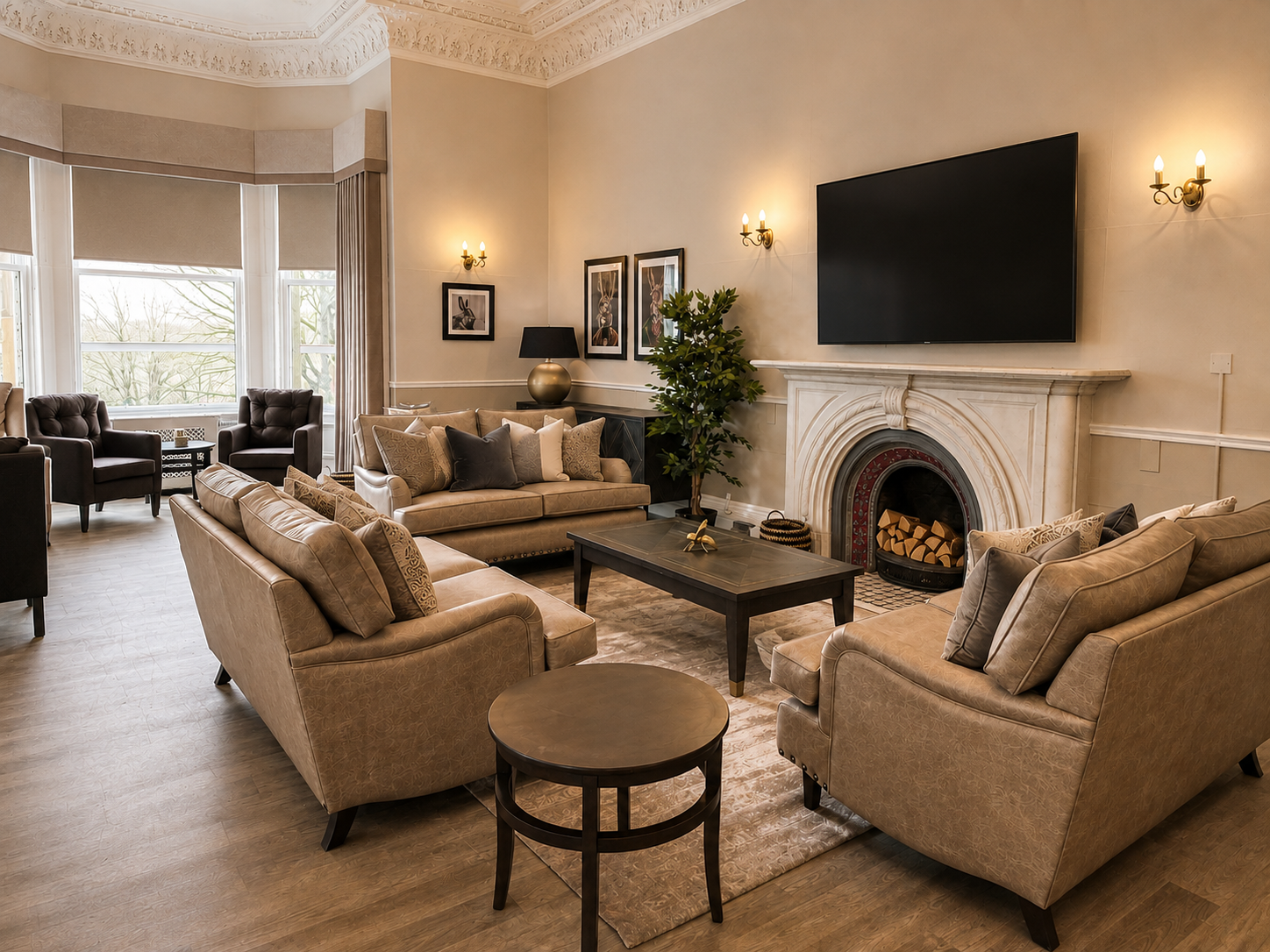
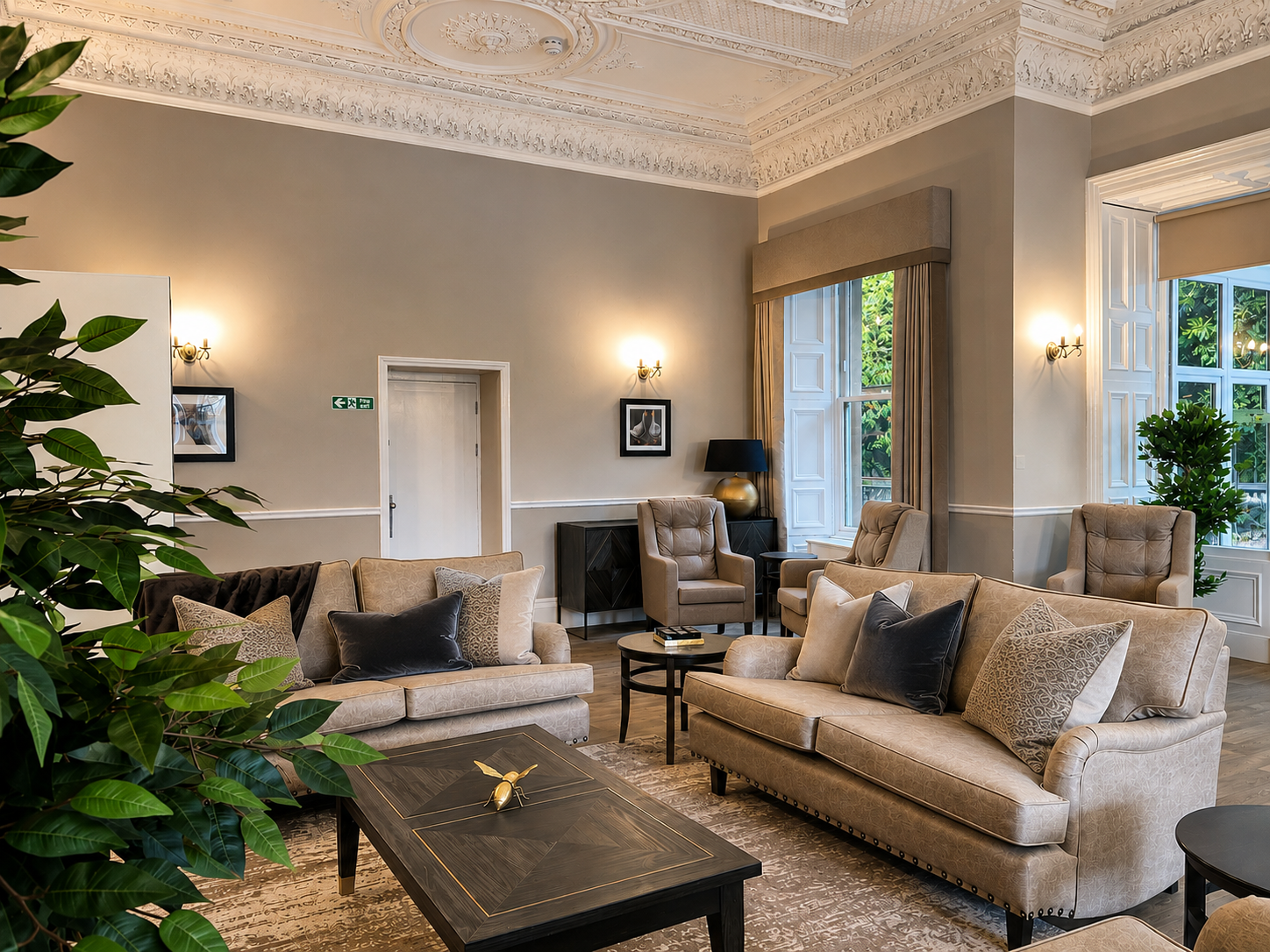
Inspired by the character of the building itself, this residential rehabilitation project combines timeless interiors with carefully considered spaces that support wellbeing. From elegant lounges and therapy rooms to calming bedrooms and communal areas, every detail was designed to create a warm, welcoming environment that feels safe, comfortable and beautifully residential.
Brief – Designing Spaces That Support Recovery
The environment we spend time in has a powerful effect on how we feel. When designing spaces for people on a journey of recovery, creating a sense of calm, comfort and security becomes just as important as creating something beautiful.
For this residential rehabilitation project, we were commissioned to design a collection of communal and private spaces that would support residents throughout their stay. From welcoming lounges and therapy rooms to dining areas, bedrooms, corridors and relaxation spaces, every room was designed with wellbeing at its heart.
The building itself became our biggest source of inspiration. Its beautiful architecture, generous proportions and original character provided the perfect foundation for a timeless interior scheme that respected the building’s heritage while introducing a fresh, contemporary elegance.
A soft, neutral palette runs throughout the project, complemented by warm timber finishes, tactile fabrics and carefully layered lighting. Together, these elements create interiors that feel calm, reassuring and quietly luxurious—spaces where residents can relax, reflect and feel comfortable in their surroundings.
The main lounge was designed as the social heart of the building. Comfortable seating, elegant furniture and thoughtful styling encourage conversation, connection and moments of quiet reflection, while the original architectural features bring warmth and character that simply can’t be replicated.
Alongside the communal areas, dedicated therapy and relaxation rooms were created to provide peaceful spaces for one-to-one sessions, mindfulness and personal wellbeing. By keeping the interiors understated and uncluttered, the focus remains on creating environments that feel safe, welcoming and free from distraction.
Bedrooms continue the same design approach, offering residents private spaces that feel restful and residential rather than institutional. Every detail was selected to help create an atmosphere that supports comfort, dignity and everyday living.
Throughout the project, consistency was key. From the hallways that connect each space to the dining rooms and quiet lounges, every area feels part of one considered design story, creating a seamless experience that helps residents feel settled from the moment they arrive.
Projects like this are a reminder that great interior design goes far beyond aesthetics. The spaces we create have the ability to influence mood, encourage connection and support wellbeing. By combining timeless design with thoughtful planning, we created interiors that feel welcoming, uplifting and perfectly suited to the important role they play.
The most successful wellbeing spaces don’t ask for attention—they quietly make people feel comfortable, supported and at ease. That’s where thoughtful design can make the greatest difference.